
Published: 08/27/26
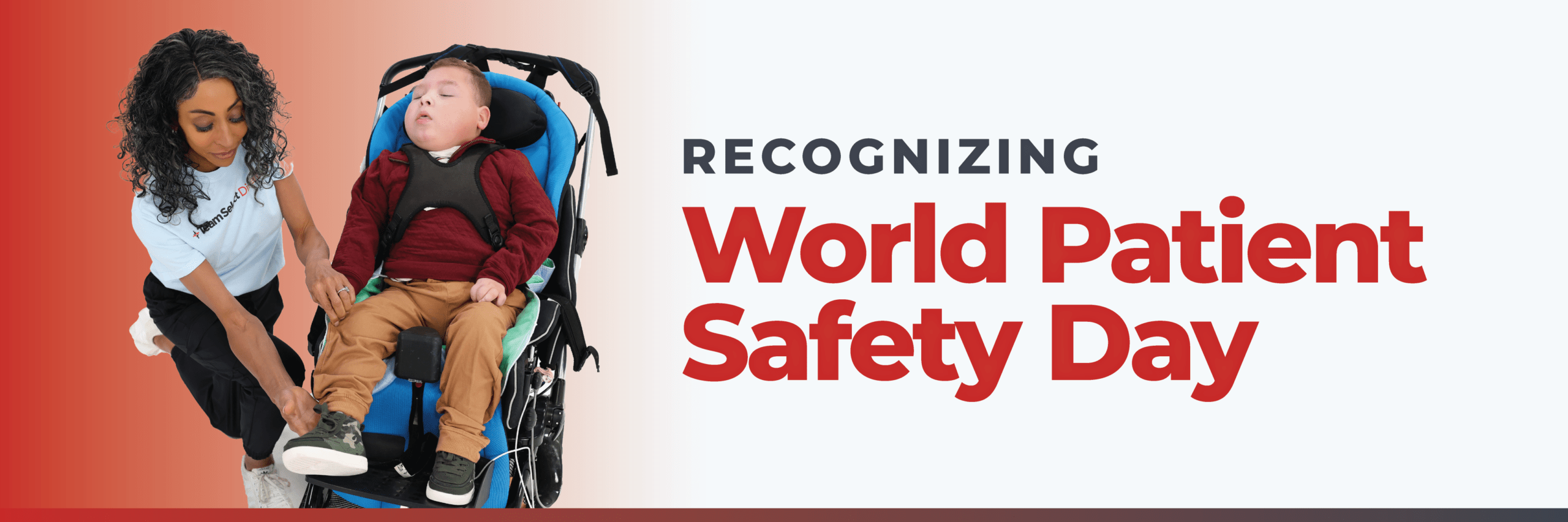
World Patient Safety Day is recognized every year on September 17 as a global reminder that safe care matters in every setting where people receive support. In 2026, the World Health Organization’s theme is “Safe care for noncommunicable diseases” with the slogan “Safe care for life!” WHO notes that people living with noncommunicable diseases often need continuous care across multiple settings and long periods of time, which can create many points where safety risks may arise.
For families caring for a medically complex child or adult, that message can feel deeply personal.
Care does not only happen during one appointment, one discharge, or one visit with a provider. For many patients, care happens every day through medication routines, equipment needs, symptom monitoring, documentation, communication with providers, caregiver support, and ongoing decisions made at home. That is why care coordination matters.
When families, nurses, physicians, case managers, specialists, and care teams are aligned, patients may be better supported through daily routines and long-term care needs. In home health care, patient safety is not only about responding when something goes wrong. It is about helping families and care teams communicate clearly, recognize changes earlier, follow the care plan, and understand what to do when questions or concerns arise.
Quick Answer: How Does Care Coordination Support Patient Safety in Home Health Care?
Care coordination supports patient safety in home health care by helping families, nurses, providers, case managers, and care teams stay aligned around the patient’s needs. For children and adults with chronic or complex conditions, strong coordination may help reduce confusion, improve communication, support medication routines, strengthen documentation, identify changes in condition, and make it easier for families to know who to contact when concerns arise.
Depending on the patient’s needs, physician orders, eligibility, payer requirements, and available services, home health care may include private duty nursing, skilled nursing support, family education, clinical oversight, and care planning support. At Team Select Home Care, our goal is to help medically complex patients and their families feel more informed, supported, and connected while receiving care at home.
World Patient Safety Day 2026 and the Meaning of Safe Care at Home
The 2026 World Patient Safety Day campaign focuses on noncommunicable diseases, often called NCDs. WHO describes NCDs as long-term conditions such as cardiovascular diseases, cancers, diabetes, and chronic respiratory diseases that can affect people of all ages and often require ongoing care throughout life. WHO also emphasizes that safety risks can arise across the continuum of care, including health care settings, homes, and communities.
For Team Select Home Care, this observance creates an opportunity to talk about what safe care can look like in the home.
Many medically complex children and adults receive support across multiple parts of the health care system. A patient may have a primary care provider, specialists, nurses, therapists, case managers, family caregivers, pharmacists, equipment providers, school teams, or community resources involved in their care. Each person may hold an important piece of information. When those pieces are connected, care can feel more organized. When they are not, families may feel overwhelmed, uncertain, or unsure where to turn.
Safe care at home depends on more than one person. It depends on communication, preparation, education, documentation, and a shared understanding of the patient’s care plan.
Why Care Coordination Matters for Chronic and Complex Conditions
Chronic and complex conditions often require long-term support. For some patients, that may mean medication routines, respiratory needs, feeding support, mobility assistance, cardiac monitoring, seizure precautions, diabetes management, wound care, or other skilled needs based on the care plan. For others, it may mean ongoing communication between families, physicians, specialists, and home health care teams.
When care is complex, small communication gaps can create stress. A medication change may need to be shared. A new symptom may need to be documented. A family may need help understanding who to call. A nurse may need updated orders or clarification. A case manager may need information about services or authorization.
Care coordination helps bring those details together.
In home health care, coordination may help families understand the plan of care, prepare for changes, communicate concerns, and stay connected to the broader care team. It can also help nurses provide care with better context, especially when a patient’s condition changes over time. For medically complex children and adults, safer care often starts with making sure the right information reaches the right people at the right time.
What Patient Safety Can Look Like in Home Health Care
Patient safety at home can look different from patient safety in a hospital or clinic. In the home, care happens within the rhythm of daily life. Families may be managing school schedules, work responsibilities, appointments, meals, sleep, equipment, medications, transportation, and emotional stress while also caring for a loved one with medical needs.
That makes patient safety both clinical and practical.
It may include following physician-directed care plans, documenting changes, supporting medication routines, recognizing signs that need follow-up, communicating concerns, preparing for emergencies, maintaining equipment routines, and helping families understand when to contact a provider.
It may also include listening carefully to families. Parents and caregivers often know the patient’s baseline, comfort cues, routines, and subtle changes better than anyone. Their input can be essential to safe, personalized care.
In pediatric home health care, a parent may notice that their child’s breathing, feeding tolerance, energy, sleep, or comfort looks different. In adult home health care, a family caregiver may notice changes in strength, alertness, appetite, pain, mobility, or medication response. Those observations matter. A strong home health care team respects family insight and helps turn those observations into clear communication.
How Private Duty Nursing Supports Safer Daily Care
Private duty nursing may support children and adults who need ongoing skilled nursing care at home. Depending on the patient’s needs, physician orders, eligibility, payer requirements, and available services, private duty nurses may provide one-on-one skilled support during scheduled shifts. This care may include monitoring changes in condition, following the care plan, supporting medication routines, documenting care, communicating with families and clinical teams, and helping patients receive care in a familiar environment.
Private duty nursing does not remove the need for family involvement. Instead, it can help build support around the patient and family. For many families, having a skilled nurse in the home may help make daily care feel more manageable. Nurses can provide clinical support while also helping families understand routines, ask questions, and communicate concerns when something changes.
This type of support can be especially meaningful for medically complex children, adults with chronic needs, and patients transitioning from hospital-based care to home-based care. The goal is not to complete tasks – the goal is to support safer and more coordinated care over time.
How CareSightAI Adds Another Layer of Safety
Nurses and families are often the first to notice when something feels different. Team Select’s CareSightAI platform is built to help catch those moments even earlier. Using predictive analytics across respiratory, cardiac, and infection-related monitoring, CareSightAI looks for early patterns in a patient’s data that can point to a change before it becomes an emergency. This additional safety net can matter for a medically complex child or adult, giving nurses, families, and care teams more room to act instead of react. It’s not a replacement for the people who know the patient best, it’s another set of eyes working alongside them, built specifically for home health care patients.
For families managing a chronic or complex condition, CareSightAI is one more way Team Select works to make safety feel less like a single moment and more like something happening every day, quietly, in the background.
Families and Caregivers Are Part of the Safety Team
WHO’s 2026 campaign emphasizes that people living with NCDs should be partners in safe care, and that meaningful engagement and health literacy can help reduce harm. That idea is especially important in home health care.
Families and caregivers are often the people who see what happens between appointments, between shifts, and during everyday routines. They may notice subtle changes before anyone else. They may understand what is typical for the patient and what feels different. When families feel informed and heard, they are better able to participate in the care process.
This does not mean families should have to carry every responsibility alone. It means they should be treated as essential members of the care team. They should know who to contact, what information to share, what changes to watch for, and how to ask questions when something does not feel right. In home health care, safer care depends on partnership. Nurses bring clinical skill. Families bring lived experience. Providers bring medical direction. Case managers and care coordinators help connect the pieces. When those voices work together, patients are better supported.
How Communication Helps Reduce Confusion at Home
Clear communication is one of the most important parts of patient safety. Families caring for medically complex children or adults may be managing information from many sources. There may be physician orders, medication lists, discharge instructions, specialist updates, therapy recommendations, equipment instructions, insurance requirements, and nursing documentation.
When communication is unclear, families may not know which instructions are current, who to call, or what changes need attention.
Care coordination helps reduce that uncertainty. A strong home health care team should help families understand their points of contact, how updates are shared, how concerns are escalated, and how care plan changes are communicated. Nurses and clinical teams should also have clear pathways for asking questions and sharing updates when a patient’s needs change.
In many cases, safer care at home is built through repeated moments of communication: a documented change, a clarified order, a family concern shared early, a nurse update passed to the clinical team, or a care coordinator helping connect the next step. Those moments may seem small, but they can make a meaningful difference.
Medication Safety and Home Health Care Support
Medication routines are one of the most important areas of patient safety, especially for people with chronic or complex conditions.
Some patients may take multiple medications. Others may have medications that change after a hospitalization, specialist visit, or change in condition. Families may need to understand timing, dosage, administration instructions, storage requirements, side effects to watch for, and what to do if a dose is missed. In home health care, skilled nurses may help support medication safety by following physician orders, documenting medication administration, communicating questions or concerns, and helping families understand when to contact the appropriate provider.
Medication safety also depends on clear communication across the care team. If a medication changes, the updated information needs to be understood by the family, nurse, provider, and anyone else involved in the care plan. Families should always follow the guidance of their physician, pharmacist, or licensed care provider when they have medication questions. Home health care teams can help support communication and documentation, but medication decisions should remain guided by the appropriate medical professionals.
How Team Select Home Care Supports Safer Care at Home
At Team Select Home Care, we understand that caring for a medically complex child or adult at home can involve many moving parts. Families may be managing appointments, medications, care routines, equipment, symptoms, provider communication, insurance or Medicaid requirements, and daily caregiving responsibilities. That can feel overwhelming, especially when care needs are ongoing or changing.
Team Select supports families through pediatric home health care, adult home health care, private duty nursing, clinical oversight, family-centered communication, care coordination, and personalized support based on the patient’s needs.
Depending on location, eligibility, physician orders, payer requirements, staffing availability, and available services, our teams may help families understand care options, coordinate next steps, support communication, and connect with local resources. Our approach is centered on helping patients receive skilled, compassionate care in the comfort of home while supporting the families and caregivers who are part of that care every day.
Patient safety is not separate from that work. It is part of how care is planned, communicated, documented, and supported.
Questions Families Can Ask About Safer Care at Home
Families who want a more practical starting point can also use our Patient Safety Checklist for Home Health Families to think through emergency contacts, medication lists, follow-up appointments, fall prevention, medical equipment, and communication routines that may help support safer care at home.
If your loved one has chronic or complex medical needs, it may be helpful to ask the care team what changes should be reported, who should be contacted after hours, how medication updates are communicated, how the care plan is reviewed, and what documentation may be needed if services change.
Families can also ask whether home health care or private duty nursing may be appropriate, what support may be available in their state, and how care coordination works between nurses, providers, case managers, and family caregivers. For pediatric families, it may be helpful to ask how parents and caregivers are included in the care plan, how nurses are prepared for the child’s specific needs, and how changes in condition are communicated. For adults with chronic or complex conditions, families may want to ask how care teams support medication routines, symptom monitoring, documentation, mobility support, and communication with providers.
Asking questions is part of safe care. It helps families feel more informed and helps care teams better understand what support is needed.
Safe Care at Home Starts With Connection
World Patient Safety Day 2026 reminds us that safe care for chronic and complex conditions must continue across the full care journey, including daily life at home. For medically complex children and adults, safety is built through more than one visit, one instruction, or one care plan. It is built through communication, coordination, education, documentation, clinical support, and partnership with families.
When families feel heard, nurses feel supported, and care teams stay connected, home health care can become a safer and more coordinated experience.
If your family is caring for a loved one with chronic or complex medical needs, Team Select Home Care can help you explore pediatric home health care, adult home health care, private duty nursing, and available support based on your location, eligibility, physician orders, payer requirements, and available services.
Frequently Asked Questions About Home Health Care & Patient Safety

