
Ready for a First Nursing Role That Supports Your Growth?
Your first nursing job should help you build confidence, ask questions, develop clinical skills, and feel supported as you transition from nursing school into real-world care.
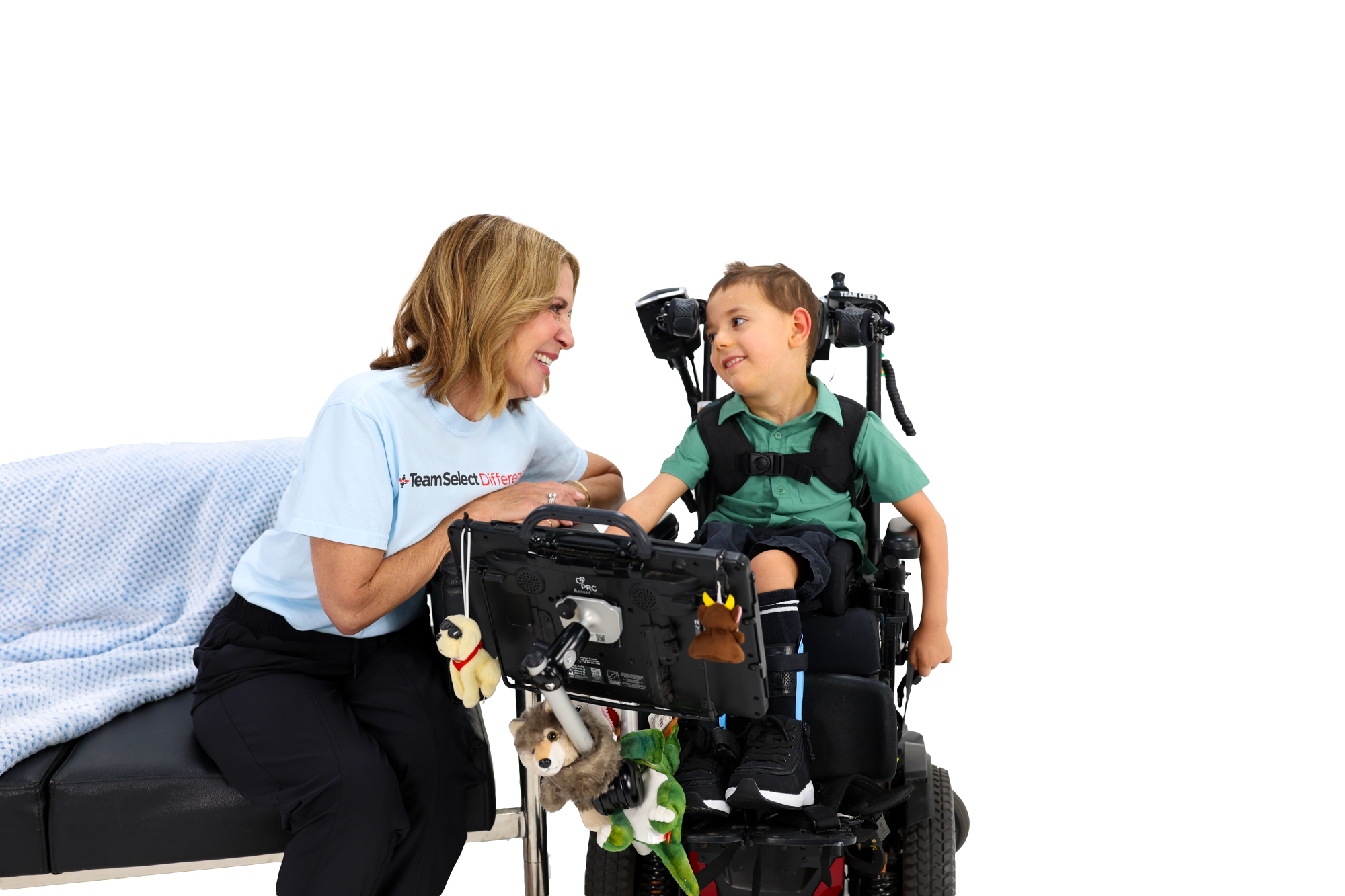
At Team Select Home Care, new graduate RNs and LPNs can begin their careers in a one-on-one home health setting with structured support, mentorship, and meaningful patient relationships. For nurses interested in pediatric care, long-term care, flexible scheduling, and a more personal care environment – home health can be a powerful place to start.
Everything you need to do after nursing school, from graduation day to your first 90 days on the job.
You made it. After years of clinical rotations, skills labs, all-night study sessions, and more SBAR practice than any human should endure, you are officially a nursing school graduate. And when you finally crossed that stage or opened that email confirming your degree – that feeling was real. You earned every second of it!
And now, if you are like most new nursing graduates, you are also feeling something else: a mix of excitement, relief, and the creeping anxiety of “okay… what exactly do I do next?”
That is exactly what this guide is for. We have broken down every step, from the paperwork you need to file this week to how to survive (and thrive) in your first 90 days on the job.
This checklist is updated every year for the Class of 2026 and beyond. Bookmark this page, work through it at your own pace, and come back as you move through each phase of your transition from nursing student to licensed nurse.
Quick Answer: What Should New Nursing Graduates Do First?
New nursing graduates should first request official transcripts, apply for licensure through their state Board of Nursing, register for the NCLEX, prepare for the Authorization to Test, update their resume, and begin applying for nursing jobs or new graduate nurse residency programs.
After licensure, new nurses should focus on choosing the right first job, preparing for onboarding, understanding benefits and student loans, building clinical confidence, and seeking mentorship during the first 90 days.
2026 New Nurse Graduate Snapshot
The nursing field continues to offer meaningful career opportunities for new graduates. According to the U.S. Bureau of Labor Statistics, employment of registered nurses is projected to grow 5% from 2024 to 2034, with about 189,100 RN openings projected each year, on average, over the decade.
Sources: Bureau of Labor Statistics 2026; ZipRecruiter 2026 Annual Grad Report
For new nurses, that means your first career move matters. The right environment can help you grow clinically, build confidence, and find the type of care setting where you can thrive.
Phase 1: Before and At Graduation
Set the Foundation Before Graduation Day
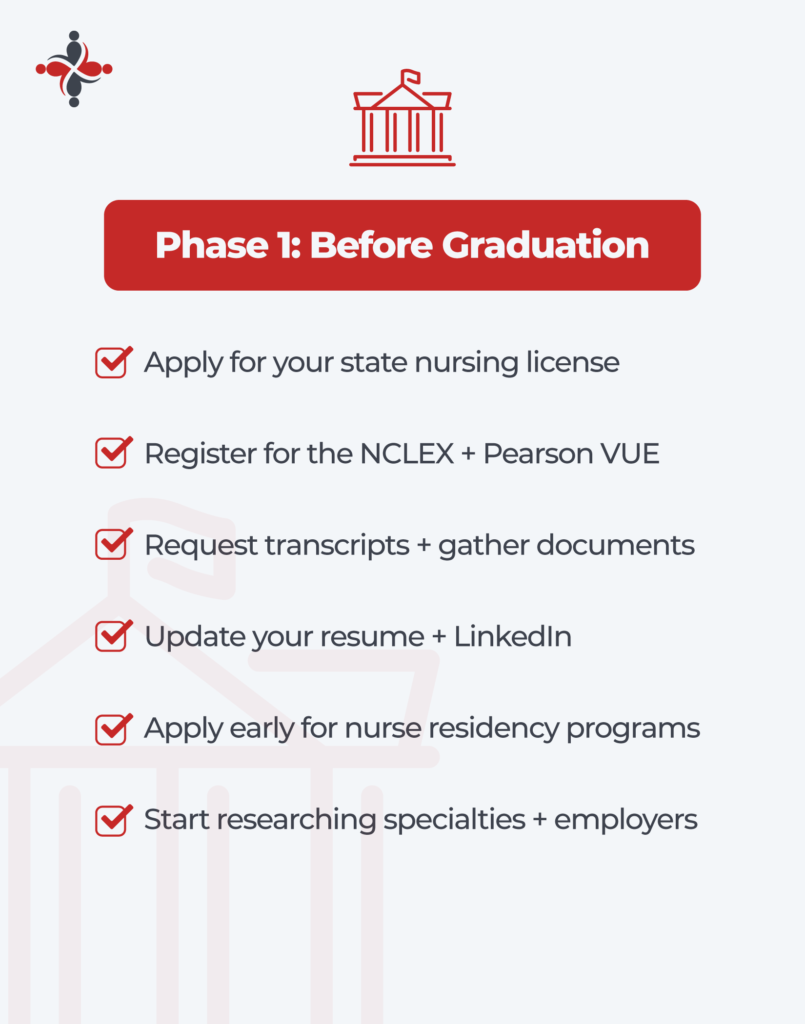
Most nurses do not realize how much they can, and should, do before they receive their diploma. Starting these steps early puts you weeks ahead of classmates who wait until after graduation to begin.
Paperwork and Credentials: Do These First
1. Request Your Official Transcripts
Your state Board of Nursing will likely require official transcripts from your nursing program. Request them as early as possible because processing can take time, especially during peak graduation season.
2. Confirm Your Program’s NCLEX Approval Code
You may need your school’s program code when registering for the NCLEX. Confirm the correct code with your nursing program or registrar before submitting your registration.
3. Apply for Licensure With Your State Board of Nursing
Each state has its own Board of Nursing application process. Complete your state licensure application as soon as you are eligible. This process usually happens alongside NCLEX registration.
4. Register for the NCLEX
Register for the NCLEX through Pearson VUE and make sure your name matches your government-issued ID exactly. Even a small mismatch can delay your Authorization to Test.
The NCLEX registration process includes required fees, and candidates should review current payment details directly through NCLEX before registering.
5. Prepare for Your Authorization to Test
Your Authorization to Test, often called your ATT, allows you to schedule your NCLEX exam. Once it arrives, schedule your exam as soon as possible because testing dates can fill quickly during May, June, and July.
6. Create a Professional Email Address
If you are still using a student email or an informal personal email, create a professional email address before applying to nursing jobs.
A simple format works best:
7. Update Your LinkedIn Profile
Add your nursing degree, clinical rotations, certifications, healthcare experience, and expected licensure. A strong LinkedIn profile helps recruiters understand your background quickly.
Suggested headline:
New Graduate Nurse | RN Candidate | [State]
or
Licensed Practical Nurse | New Graduate | [State]
8. Update Your Nursing Resume
Your resume should highlight:
- Nursing degree
- Clinical rotations
- Certifications such as BLS or ACLS
- CNA, PCT, caregiver, or healthcare experience
- Specialty interests
- Volunteer experience
- Leadership roles
- Relevant skills
Focus on what makes you ready to learn, communicate, and provide safe patient care.
Pro Tip: ATT Timing is Everything
NCLEX testing center spots fill fast in May and June, the two biggest graduation months. The moment your ATT email arrives, log into Pearson VUE and schedule your exam date immediately. Do not wait. Popular locations book up within days.
Start Your Nursing Job Search
Begin Applying Earlier Than You Think
Many hospitals and health systems open new graduate residency applications 3–6 months before the start date. If you are graduating in May 2026, some positions for July and August cohorts may already be posted, or closing soon.
New Grad Nurse Job Search Checklist
Research Different Nursing Career Paths
Hospital (acute care), home health, long-term care, school nursing, outpatient clinics, and specialty practices all have different cultures, caseloads, and growth trajectories. Know what you are applying to.
Common first nursing roles include:
- Hospital or acute care nursing
- Home health nursing
- Private duty nursing
- Long-term care
- School nursing
- Outpatient clinics
- Pediatric nursing
- Rehabilitation
- Specialty practices
Each environment offers a different pace, patient ratio, level of support, and type of clinical experience.
Consider Home Health as a First Career Move
Home health nursing is one of the fastest-growing sectors in 2026. Ambulatory and home-based care added 50,000 jobs in January 2026 alone. Lower patient ratios, flexible scheduling, and meaningful one-on-one care make it a compelling first role, and a differentiated one.
This can be a meaningful first step for new graduates who want one-on-one patient care, strong relationships with families, and the opportunity to build clinical confidence with support.
For new nurses interested in pediatrics, complex care, flexible scheduling, and deeper patient connection, home health is worth a closer look. At Team Select Home Care, new graduate nurses have the opportunity to care for medically complex pediatric and adult patients while receiving structured support, mentorship, and training.
Why Home Health Nursing Is Worth a Closer Look in 2026
Healthcare delivery is moving out of hospitals and into homes, fast. In January 2026, ambulatory and home-based care roles accounted for more than half of all new healthcare jobs added nationwide. Home health nurses work with lower patient ratios, build deep long-term relationships with patients and families, and often have more scheduling flexibility than hospital nurses. For new grads interested in pediatrics, complex care, or work-life balance from day one, it is worth exploring.
Apply to New Graduate Nurse Residency Programs
Many hospital systems run structured new grad residencies (12–18 months of mentored onboarding). These are competitive and have early deadlines — search “[Your City] new graduate nurse residency 2026.”
When reviewing residency programs, ask:
- How long is the program?
- How much supervised training is included?
- Will I have a preceptor?
- Will I have a clinical mentor?
- What skills will I learn?
- When am I expected to work independently?
- What support is available after orientation?
Prepare for Nursing Interviews
Practice behavioral questions using the STAR method (Situation, Task, Action, Result).
Common nursing interview questions include:
- Tell me about a difficult patient interaction.
- How do you handle competing priorities?
- Describe a time you received constructive feedback.
- Why are you interested in this specialty?
- How do you stay calm under pressure?
- What does patient-centered care mean to you?
Know What to Ask Before Accepting an Offer
Beyond hourly rate, negotiate: signing bonus, shift differential, tuition reimbursement, NCLEX reimbursement, start date, and benefits. Many employers expect negotiation from new grads, do not leave it on the table. Before accepting your first nursing job, ask:
- What does onboarding look like for new graduates?
- Is there a preceptor or mentor program?
- How long is orientation?
- What clinical skills will I be expected to perform?
- What is the patient ratio or caseload?
- What support is available after hours?
- When do benefits begin?
- Is tuition reimbursement available?
- Are there opportunities for advancement?
- What does scheduling look like in the first year?
Your first nursing job should help you build confidence, not leave you feeling unsupported.
Phase 2: Graduation Through Licensure
The NCLEX Phase
This phase can feel urgent, emotional, and overwhelming. That is normal. The goal is not to study every hour of the day. The goal is to prepare consistently, protect your rest, and build the clinical judgment needed to pass.
NCLEX Prep Checklist
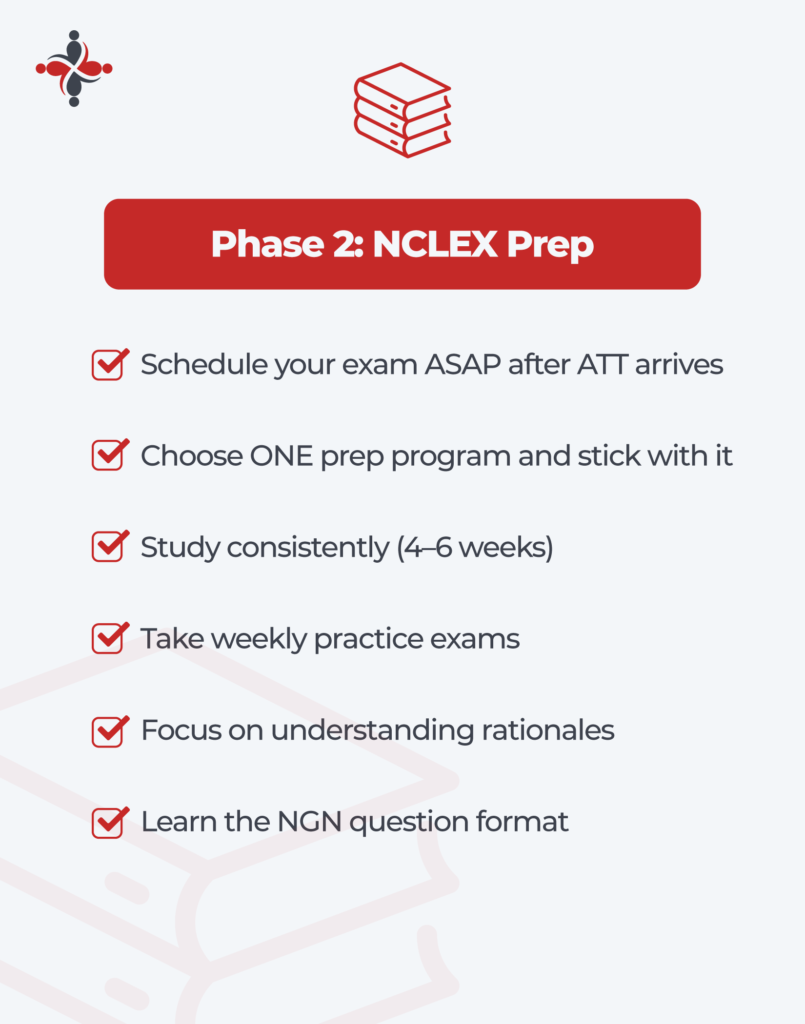
Schedule Your NCLEX When Your ATT Arrives
Once you receive your Authorization to Test, schedule your exam as soon as possible. Your ATT is typically valid for 90 days and cannot be extended for any reason. Schedule immediately. Testing centers near nursing schools fill up especially fast in May–July.
Choose One Primary NCLEX Prep Resource
Avoid jumping between too many study tools. Choose one primary resource and use it consistently. The research is clear: students who thoroughly complete one prep course outperform those who partially use several. Pick your style, question bank heavy, video-based, or instructor-led, and go deep.
Popular NCLEX prep options include:
|
Resource |
| Price Range
|
| Best For
|
| Pass Rate / Notes
|
| UWorld
|
$129–$279
|
Question-bank learners
|
92% first-time pass rate. Gold standard for rationale depth.
|
| Kaplan
|
$425–$525
|
Structured learners
|
90% pass rate. Best with live sessions + Decision Tree method.
|
| Nursing.com
|
~$59/month
|
Visual / video learners
|
99.42% reported pass rate. Engaging video content.
|
| Archer Review
|
$69–$399
|
Budget-conscious grads
|
2,800+ adaptive questions. Great value alternative.
|
| NCLEX Bootcamp
|
Use code FUTURERN10
|
NGN-focused learners
|
10% discount with promo code. High-yield NGN case studies.
|
| BoardVitals
|
$95+
|
Supplement / final prep
|
3,700+ CAT questions. Best used after a primary course.
|
Understand the Next Generation NCLEX
The Next Generation NCLEX launched on April 1, 2023, to better measure clinical judgment and decision-making ability through new item types. The NGN emphasizes clinical judgment over memorization. It uses new question types: extended drag-and-drop, bow-tie questions, matrix grids, and case studies. Make sure your prep course covers NGN format explicitly.
The NGN may include:
- Case studies
- Matrix/grid questions
- Extended drag-and-drop
- Bow-tie questions
- Highlighting questions
- Multiple-response formats
Make sure your prep resource specifically includes NGN-style practice questions.
Build a Realistic Study Schedule
Most graduates benefit from a steady study plan instead of last-minute cramming. Most candidates study 4–6 hours per day over 4–6 weeks. Aim for consistency over intensity. Burnout before the exam is real and common — build in rest days and do not sacrifice sleep.
A realistic plan may include:
- Daily practice questions
- Review of rationales
- Weekly readiness assessments
- Focused review of weak areas
- Scheduled rest days
- Sleep and recovery before the exam
Take timed practice assessments weekly
Simulate exam conditions. Time pressure changes how you perform. Weekly full-length practice sessions help you build test-taking endurance and identify weak content areas early.
Focus on Rationales, Not Just Answers
Reading rationales is where much of the learning happens. Review both correct and incorrect answers so you understand the clinical reasoning behind each question. Do not just move on after getting an answer right. Understand why
Prepare for Exam Day
Bring your ATT and a valid government-issued photo ID. Your name must match exactly. Arrive early. Personal items are not allowed in the testing room. The exam ends when the computer determines your competency — this can happen at 85 questions or up to 150. Before test day, confirm:
- Your testing location
- Arrival time
- Required ID
- Name match between your ID and registration
- What items are allowed
- What items are prohibited
- Travel time and parking
If You Do Not Pass the NCLEX the First Time
Not passing the NCLEX on your first attempt does not define your nursing career.
Approximately 15–20% of first-time test takers do not pass the NCLEX on their first attempt. If this happens to you: take 24 hours to feel it, then make a plan. Most states allow you to retest after 45–90 days. Analyze your results report, switch prep resources, and consider a live review course. Thousands of exceptional nurses did not pass on the first try. It does not define your career.
Many strong, compassionate, clinically excellent nurses did not pass on their first attempt. What matters most is how you recover, prepare, and keep moving forward.
Phase 3: Licensure Through Your First Day
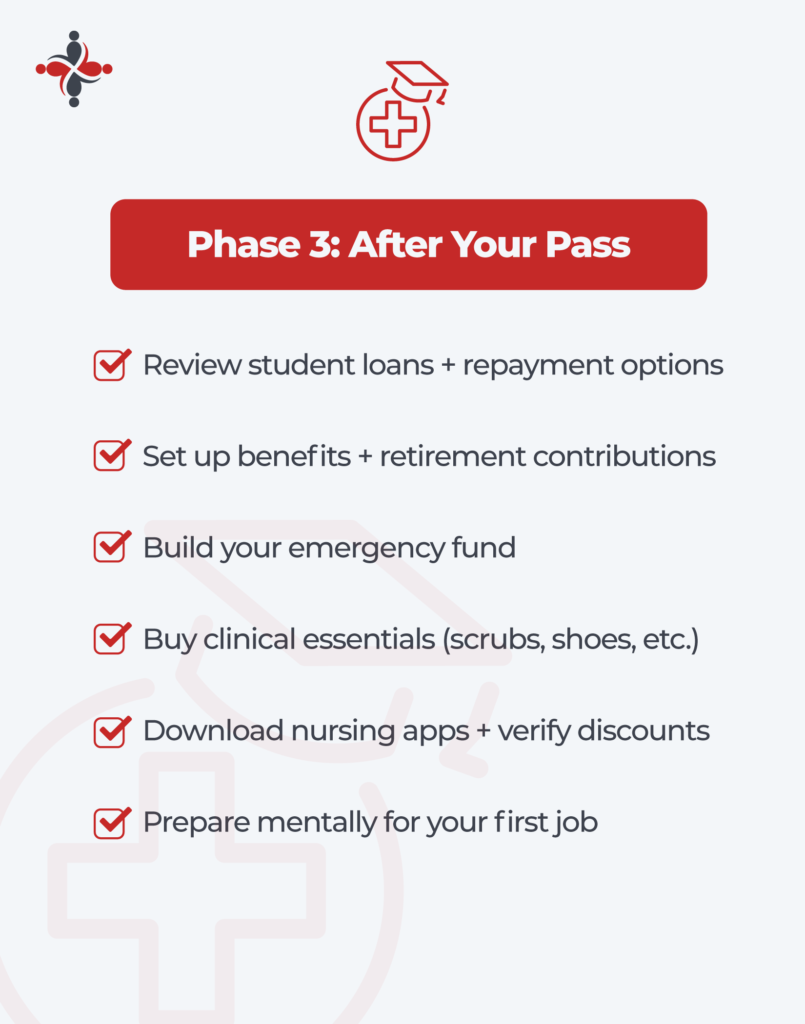
You Are Licensed. Now What?
You passed. You are officially a licensed nurse. Take a breath. This is a major moment.
Now it is time to prepare for the professional, financial, and emotional realities of your first nursing role.
Financial Health Checklist for New Nurses
Understand Your Student Loans
Log into studentaid.gov to see your full loan picture. Know your servicer, your balance, and when your grace period ends (typically 6 months after graduation for federal loans). Log in regularly and review:
- Loan servicer
- Total balance
- Interest rates
- Grace period
- Monthly payment estimate
- Repayment plan options
Explore Nurse Corps Loan Repayment
The HRSA Nurse Corps Loan Repayment Program may pay up to 85% of unpaid nursing education debt for eligible RNs, APRNs, and nurse faculty who commit to working in underserved communities. Applications open annually — check hrsa.gov/nurserepayment for current cycles.
Ask About Tuition Reimbursement
If you plan to pursue your BSN, MSN, or a specialty certification, many employers — including Team Select Home Care — offer tuition reimbursement. Negotiate this before you sign your offer letter.
Understand Your First Paycheck
Know the difference between gross and net pay. Set up direct deposit. If your employer offers a 401(k) or 403(b) with any matching contribution, enroll as soon as you are eligible — even a small percentage makes a long-term difference. Before your first paycheck arrives, review:
- Gross pay vs. net pay
- Taxes
- Benefits deductions
- Retirement contributions
- Shift differentials
- Overtime policies
- Direct deposit setup
Review Your Benefits Carefully
Compare: health/dental/vision premiums and coverage levels, PTO and/or sick time accrual rate, , life insurance, disability coverage, and any employee assistance programs (EAP) for mental health support. Look at:
- Health insurance
- Dental and vision
- Sick time or PTO
- Retirement plans
- Disability coverage
- Life insurance
- Employee assistance programs
- Tuition reimbursement
- Professional development support
Start an Emergency Fund
Starting with a stable nursing income is the right time to begin. Aim for 3 months of living expenses in a high-yield savings account before you increase lifestyle spending. Once your nursing income begins, start building financial stability. Even a small automatic transfer into savings can help you build momentum.
First Day Essentials
Show Up Prepared, Not Perfect
Your first day is not about knowing everything. It is about being ready to learn, ask questions, and practice safely.
New Nurse First Day Checklist
Stock Your Clinical Bag
Essentials: 2–3 sets of scrubs (your employer may specify color), comfortable nursing shoes with non-slip soles, a quality stethoscope, bandage scissors, a reliable pen (two), and a small notebook or clinical reference app. Other helpful items may include:
- Scrubs
- Comfortable nursing shoes
- Stethoscope
- Bandage scissors
- Pens
- Small notebook
- Watch with second hand
- Water bottle
- Healthy snacks
- Phone charger
- Badge holder
Always confirm your employer’s dress code and equipment expectations before purchasing items.
Download Helpful Clinical Apps
Epocrates or Micromedex (drug reference), Medscape, your state’s nurse practice act PDF, and your employer’s EHR training app if available. Most are free with a nursing license. Consider downloading:
- Drug reference app
- Clinical reference app
- Your state Nurse Practice Act
- Employer communication or EHR app, if applicable
Set Up ID.me or Other Verification Tools
Create your free ID.me account at id.me and verify your nursing license. This single verification unlocks hundreds of ongoing discounts on scrubs, shoes, food, tech, and more — including many listed in our New Grad Discounts Guide. Many nurse discounts require verification through platforms such as ID.me or SheerID. Setting up this verification early can help you access discounts on scrubs, shoes, food, technology, and daily essentials from many well known brands.
Review Your Employer’s Policies
You should review the employee handbook, social media policy, HIPAA acknowledgment, and dress code. Showing up day one with these already read signals professionalism that most new grads miss. Before day one, make sure to have an understanding of:
- Employee handbook
- HIPAA policy
- Social media policy
- Dress code
- Code of conduct
- Attendance policy
- Documentation expectations
Prepare Mentally for the First Week
Your first week will feel overwhelming regardless of how prepared you are. That is normal and expected. You will not know everything. You are not supposed to yet. Your job on day one is to observe, ask questions, and stay safe.
Phase 4: Survive, Stabilize, Thrive
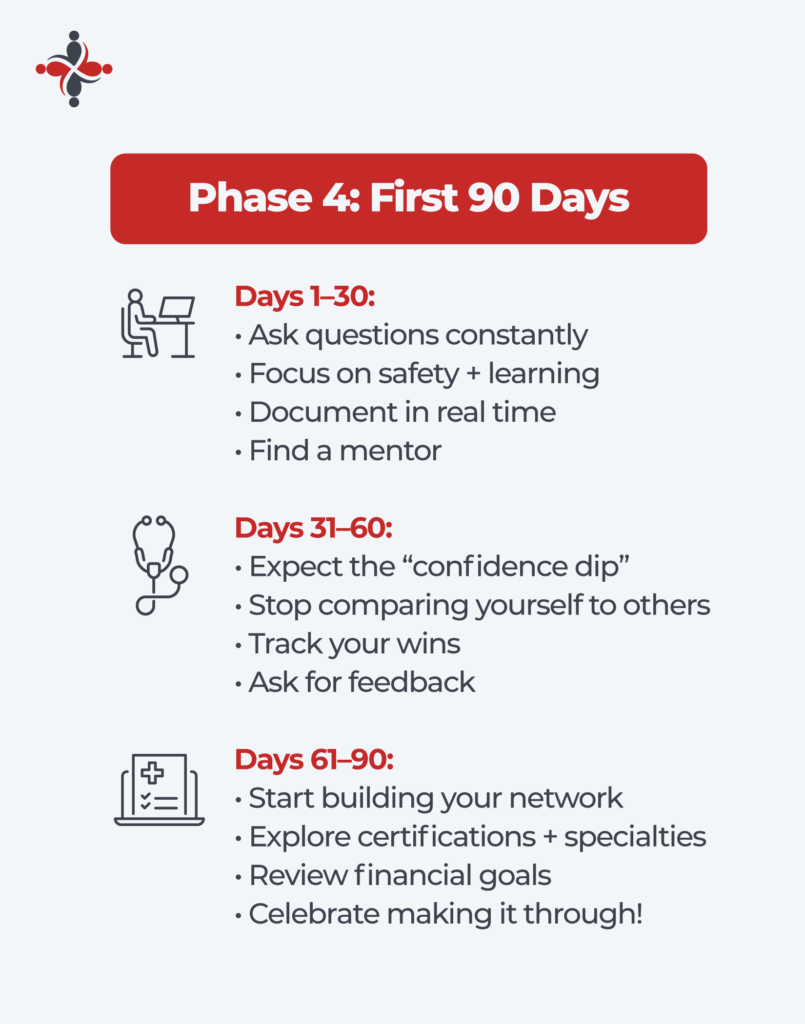
The first 90 days as a nurse are often some of the most challenging and formative days of your career. Understanding what is normal can help you move through this season with more confidence and less self-doubt.
Days 1–30: Survival Mode Is Normal
This phase is about orientation, observation, and not hurting anyone (or yourself). You will likely feel like you know nothing. You do not – not yet. And that is completely fine.
What to Focus on During Days 1–30
- Be a sponge, not a hero – Your job in the first month is to watch, listen, and ask questions. Resist the urge to prove yourself by taking on more than you are ready for. Patient safety always comes before ego.
- Ask questions every time you are unsure – There is no such thing as a stupid question in your first month. Experienced nurses would rather answer a hundred small questions than deal with one preventable error. Ask. Always.
- Learn documentation expectations – Delaying documentation is one of the top mistakes new nurses make. Chart as you go. Your memory is not as reliable as you think when you are managing multiple patients or tasks.
- Identify your go-to support person – This is not necessarily your assigned preceptor. Look for the nurse who gives calm, thorough answers under pressure. That is the person you want to build a relationship with early.
- Understand the flow of your unit, caseload, or patient schedule – Every care setting has a flow, shift handoffs, documentation rhythms, medication windows, family check-in times. Mastering the rhythm makes everything else easier.
- Build a post-shift decompression routine – Nursing is emotionally demanding from day one. Identify what helps you leave work at work: a walk, a workout, music on the drive home, a call with a friend. Build it into your routine now.
Your first month is not about proving you know everything. It is about becoming safe, aware, and teachable.
Days 31–60: The Confidence Dip
Around weeks 4–8, many new nurses hit a wall. The initial adrenaline of starting fades. You are off orientation or nearing its end. The reality of responsibility sets in. This phase has a name, some call it the “confidence dip”, and it is one of the most documented phenomena in new nurse development.
What to Focus on During Days 31–60
- Track your wins, not only your mistakes – Keep a short running list of things you handled well each week. A successful IV start. A patient who thanked you. A family member you helped navigate a hard moment. Your brain will default to mistakes – make it balance the ledger.
- Ask for feedback from your preceptor or manager – Not to confess inadequacy, but to check in. Ask: “What am I doing well? What should I be focusing on improving?” Most managers respect new nurses who seek feedback proactively.
- Stop comparing your progress to others – The nurse who looks confident at the bedside is managing their own doubts. Everyone in their first year is figuring it out. Comparison at this stage is always unfair and almost always inaccurate.
- Use your Employee Assistance Program if you need support – Employee Assistance Programs typically include free confidential counseling sessions. The emotional weight of nursing is real. Using mental health support is not weakness, it is the same thing as treating a physical symptom.
- Talk with other nurses about what you are experiencing – Studies show 77% of practicing nurses and 85.5% of nursing students report imposter syndrome. If you feel like a fraud who got lucky – you are not alone, and it does not mean you are incompetent. It means you are self-aware. Revisit your “why.”
Imposter feelings are common in healthcare. They do not mean you are incapable. They often mean you care deeply about doing the job well.
From Our Nurses: What They Wish They Had Known
“I would tell my younger self to take it one day at a time and not compare yourself to others. As a new grad, I had these expectations of how many hours I would work and how to grow my knowledge. Let the expectations go. Take advantage of every opportunity until you find your niche.”
— Dina, RN, BSN, Team Select Home Care
Days 61–90: Early Competence
Around day 60, many new nurses start to feel a shift. Tasks that once required intense concentration may begin to feel more familiar. You may start recognizing patterns, anticipating needs, and trusting your clinical instincts.
You still have a lot to learn, but you are becoming a nurse.
What to Focus on During Days 61–90
- Build your professional network – Connect with colleagues on LinkedIn. Join your state nursing association. Follow nursing advocacy organizations. Your professional community outside your employer matters for long-term career resilience.
- Identify specialty interests – By day 90 you will have enough exposure to know what you find most meaningful. Pediatric complex care? Adult rehabilitation? Community health? Follow what pulls you, specialization is where nursing careers accelerate.
- Ask about advancement pathways – What does year two look like? Are there charge nurse tracks, case management opportunities, or clinical educator roles? Understanding the growth path helps you decide if this is the right long-term fit.
- Research future certifications – Many specialties have certifications that increase your value and your pay: CPEN (pediatric emergency), CCRN (critical care), PHN (public health nursing). Start researching requirements even if you are months away from being eligible.
- Review your financial goals – Three months of paychecks in — are you on track with savings? Have you started or increased your 401(k) contribution? Is your loan repayment plan working? Make a mid-year financial check-in a habit.
- Celebrate your progress – This milestone deserves recognition. You survived the hardest stretch of your nursing career and came out the other side. Treat yourself, call someone who supported you through nursing school, and acknowledge how far you have come.
Your first 90 days deserve recognition. You made it through one of the hardest transitions in nursing.
New Grad Nurse Discount: Quick List
As a licensed nurse, you may qualify for discounts across scrubs, shoes, food, technology, wellness, and everyday essentials. Offers change often, so always verify current terms directly with each brand.
Common discount categories include:
Nurse Scrubs and Shoes
- Scrubs
- Compression socks
- Nursing shoes
- Athletic shoes
- Workwear
Nurse Tech and Tools
- Cell phone plans
- Laptops and tablets
- Clinical apps
- Headphones
- Smartwatches
Food and Daily Life
- Meal delivery
- Coffee
- Restaurants
- Fitness memberships
- Travel
For the full current list, visit Team Select’s companion guide: Nurses Week Discounts and Freebies Guide 2026
Start Your Nursing Career With Team Select Home Care
New Graduate RN and LPN Opportunities
At Team Select Home Care, we believe a great first nursing job can shape everything that comes after it.
That is why our new graduate experience is built around support, mentorship, clinical growth, and meaningful one-on-one care.
We do not just hire new nurses and hand them a badge. We invest in training, guidance, and confidence-building so new graduate RNs and LPNs can grow into safe, capable, compassionate clinicians.
The Team Select New Graduate Nurse Residency
Comprehensive 8-week residency | 240 hours | Structured, supported, and built for you
Team Select’s New Graduate Nurse Residency is designed to help bridge the gap between nursing school and real-world clinical practice in home health care.
Program highlights include:
- 8-week structured residency
- 240 total clinical training hours
- 32+ hours of directly supervised training before solo practice
- Hands-on mentorship
- Emergency preparedness training
- Pediatric and adult complex care exposure
- Weekly clinical curriculum
- Support from experienced nurses and clinical leaders
Double-Layered Mentorship
You are never alone.
New graduate nurses receive support from both a Supervising RN and an experienced Preceptor. This double-layered mentorship helps you build skills, ask questions, receive feedback, and gain confidence before working independently.
Specialized Clinical Curriculum
The residency curriculum helps new nurses build confidence in high-value home care skills, including:
- Neurological care
- Seizure management
- Diabetes monitoring
- Respiratory care
- Airway management
- Enteral tube care
- Feeding support
- Documentation and charting
- Emergency response
- Pediatric education
Built-In Confidence Before Independent Practice
Before working independently, new graduate nurses complete supervised clinical training alongside a mentor. You move forward when you are prepared, supported, and ready.
Emergency Preparedness From Day One
Emergency preparedness begins early. Through hands-on simulation and training, new nurses learn how to respond with confidence in real patient care scenarios.
Diverse Clinical Exposure
Team Select encourages orientation with multiple patients when appropriate. This helps new nurses experience different diagnoses, family dynamics, care routines, and clinical needs.
Pathways for Advancement
After completing residency, nurses may become eligible for advanced competencies, including tracheostomy and ventilator care training, depending on state requirements, patient needs, and program availability.
This opens doors to higher-acuity home health care and long-term clinical growth.
Why New Graduate Nurses Choose Team Select
Meaningful One-on-One Care
Home health gives nurses the opportunity to spend meaningful time with each patient. Instead of brief interactions across a large patient load, nurses can build trust, understand routines, and support families in a deeper way.
Lower Patient Ratios
Private duty nursing often allows nurses to focus on one patient at a time. For new graduates, this can create a supportive environment for learning, communication, and skill development.
Flexible Scheduling
Team Select offers scheduling opportunities that may support work-life balance, continued education, and personal goals.
Tuition Reimbursement Opportunities
Team Select invests in nurses who want to continue growing. Ask the recruiting team about tuition reimbursement eligibility and program details.
Innovation That Supports Better Care
Team Select is committed to re-imagining home care through innovation. Our proprietary CareSightAI™ platform helps support clinical teams with insights designed to identify changes earlier and strengthen patient outcomes.
Multi-State Opportunities
Team Select has opportunities across multiple states, including Florida, Texas, Indiana, Pennsylvania, California, North Carolina, and more.
Pediatric and Adult Complex Care
Nurses can care for medically complex children and adults while receiving support from a team that understands the importance of clinical excellence, compassion, and family-centered care.
You Are Already a Life Changer
Now let us give you the training, support, and community to prove it.
Team Select Home Care is hiring new graduate RNs and LPNs across multiple states.
Whether you are preparing for the NCLEX, searching for your first nursing job, or looking for a new graduate nurse residency that supports your growth, we are here to help you take the next step.
Frequently Asked Questions About Life After Nursing School
Join Team Select Today

