
Costumes, candy, decorations, movies, pumpkins, and neighborhood fun can all make the season feel special. But for families caring for a medically complex child, Halloween may also come with extra questions.
- Can we go trick-or-treating?
- Will the route be accessible?
- What if my child gets tired or overwhelmed?
- How do we work around medical equipment, feeding needs, sensory concerns, or infection risk?
- What if staying home is the better option this year?
The good news is that Halloween does not have to look one certain way to be meaningful or enjoyed.
For some families, Halloween may include a short trick-or-treat route. For others, it may mean celebrating from the doorway, decorating pumpkins at home, watching a favorite movie, wearing a comfortable costume, or creating a small family tradition that fits the child’s needs.
The goal is not to do Halloween perfectly. The goal is to help your child participate in a way that feels safe, comfortable, joyful, and realistic for your family.
Quick Answer: How Can Families Make Halloween Safer for Medically Complex Children?
Families can make Halloween safer by planning around the child’s medical needs, energy level, mobility, equipment, sensory comfort, feeding needs, infection risk, medication schedule, and communication preferences.
For some children, that may mean going trick-or-treating early, choosing a short and familiar route, visiting only trusted homes, avoiding crowded indoor gatherings, and having a backup plan to leave early. For others, it may mean celebrating from home with crafts, pumpkin decorating, a movie afternoon, a scavenger hunt, or a small “trick-or-treat” experience with siblings or trusted family members.
Families should always follow their child’s care plan and guidance from their healthcare providers. This article is for general education and family planning support, not medical advice.
Why Halloween May Need Extra Planning for Medically Complex Children
Halloween can involve a lot of moving parts.
Crowds may build quickly. Decorations may flash, move, or make noise. Costumes may feel itchy, tight, or uncomfortable. Weather may change. Sidewalks may be crowded or uneven. Candy may create concerns around allergies, feeding needs, choking risk, sugar intake, or dietary restrictions.
For children with complex medical needs, those details can matter.
A family may need to think about oxygen, feeding tubes, ventilators, mobility equipment, medications, suction supplies, emergency contacts, sensory triggers, fatigue, respiratory concerns, temperature regulation, or how quickly they can return home if needed.
That does not mean Halloween has to be skipped. It means the plan may need to be more thoughtful.
The CDC encourages families of children with disabilities to think through safety planning based on the child’s abilities, needs, communication, equipment, and participation in activities. That same mindset can help families approach Halloween with more confidence.
Start With the Version of Halloween That Fits Your Child
One of the most helpful things families can do is decide what kind of Halloween experience actually fits their child this year. That may look different from what siblings, neighbors, cousins, classmates, or social media make Halloween look like. It may also look different from last year.
Some children may enjoy walking house to house. Some may prefer sitting on the porch and handing out candy. Some may want to wear a costume for five minutes and then change into pajamas. Some may enjoy the decorations but not the noise. Some may love a movie afternoon more than trick-or-treating.
A meaningful Halloween does not have to be big, loud, crowded, or exhausting. It can be small. It can be calm. It can be flexible. It can be built around your child’s comfort.
Make Trick-or-Treating Safer
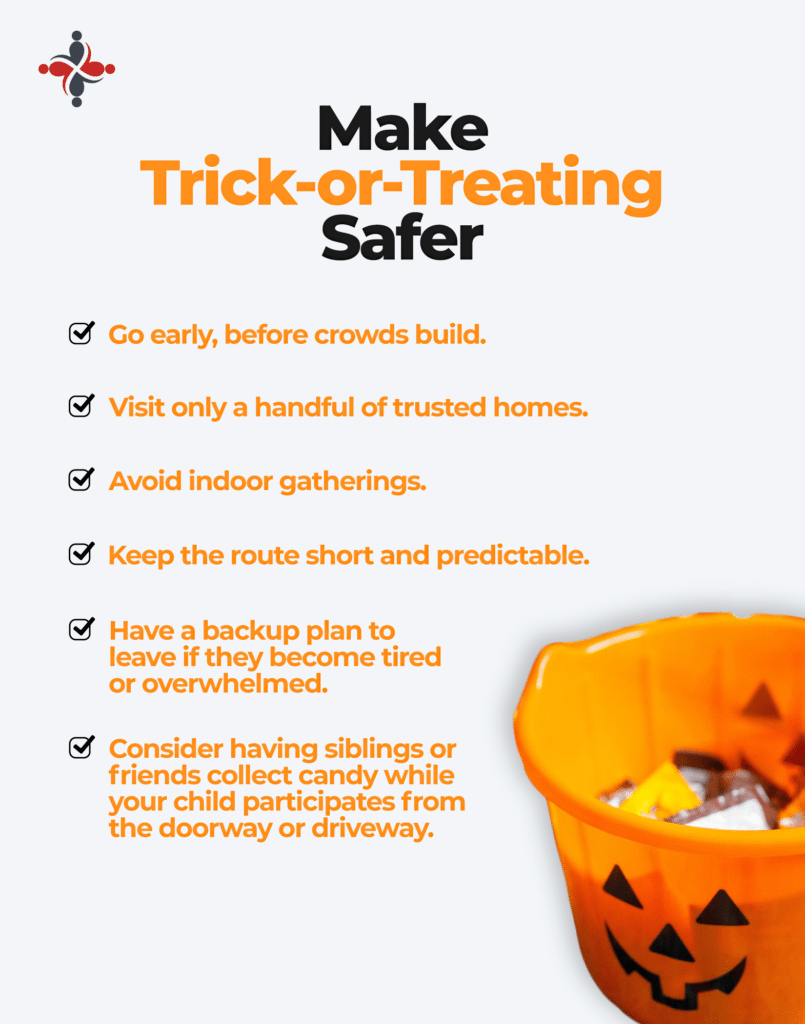
If your family decides to trick-or-treat, a simple plan can make the experience feel more manageable.
Going early may help avoid heavier crowds and reduce the chance of your child becoming tired, overstimulated, or overwhelmed. Visiting only a handful of trusted homes can also help families feel more comfortable, especially if neighbors already know your child, understand your family’s needs, or can help create a calmer experience.
A short and predictable route is often better than trying to visit as many houses as possible. Families may want to choose homes close to their own, plan an accessible path, avoid steep driveways or crowded sidewalks, and identify places to stop, rest, or turn back. Indoor gatherings may also be harder for some medically complex children, especially when families are thinking about respiratory needs, infection exposure, sensory concerns, or crowded spaces. Outdoor, lower-crowd, and familiar settings may be easier to manage. It also helps to have a backup plan before leaving the house. That plan might include a parent or caregiver taking the child home early, switching to an at-home activity, or having siblings or friends collect candy while the child participates from the doorway, driveway, stroller, wheelchair, or another comfortable space.
The American Academy of Pediatrics recommends planning ahead for Halloween safety, including costume fit, visibility, pedestrian safety, and food allergy considerations. For families of medically complex children, those general safety steps can be paired with the child’s individualized care needs.
At-Home Halloween Activities That Still Feel Special
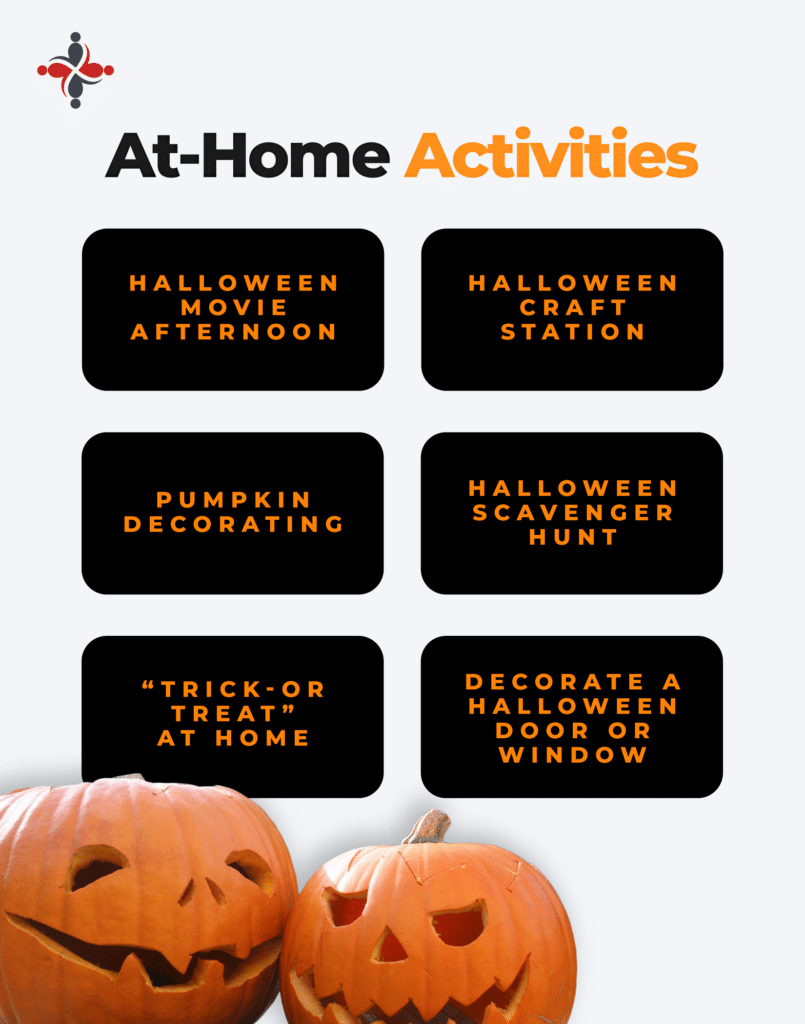
Staying home does not mean missing Halloween. For many medically complex children, at-home celebrations can be the best way to enjoy the season while staying close to medical supplies, routines, rest breaks, and familiar surroundings.
- A Halloween movie afternoon can make the day feel festive without requiring travel or crowds. Families can choose a favorite movie, dim the lights if comfortable, add cozy blankets, and make the experience feel special with decorations or themed snacks if appropriate for the child’s care plan.
- A Halloween craft station can also be simple and flexible. Children can decorate paper pumpkins, make ghosts out of tissues, color Halloween pages, create stickers, or help place decorations around a room. Crafts can be adjusted for the child’s energy level, mobility, and fine motor abilities.
- Pumpkin decorating is another strong option because it does not have to involve carving. Families can use stickers, paint, markers, ribbons, sensory-safe materials, or no-mess decorations. This can make the activity more accessible for children who may not be able to participate safely in traditional pumpkin carving.
- A Halloween scavenger hunt can be done indoors with small pumpkins, paper bats, glow sticks, or favorite toys. Families can make it as short or as long as needed.
- A “trick-or-treat at home” setup can also help children experience the fun without leaving the house. Siblings, parents, grandparents, or trusted friends can stand behind bedroom doors, hallway doors, or decorated stations and hand out approved treats, stickers, toys, or small prizes.
- Decorating a Halloween door or window can help children participate from a comfortable place while still feeling connected to the holiday. A child can help choose decorations, colors, lights, or a theme, even if they are not able to go out into the neighborhood.
Halloween can still feel magical at home.
Adaptive Halloween Costumes for Kids

Costumes can be one of the most exciting parts of Halloween, but they can also create challenges for children with medical equipment, mobility needs, sensory sensitivities, or complex care routines.
Adaptive costumes are costumes that are designed or adjusted to work with the child’s needs. They may be created for children who use wheelchairs, walkers, braces, feeding tubes, oxygen, ventilators, or other medical equipment. They may also be helpful for children who need softer fabrics, easy openings, loose fits, or simple designs. A good costume should not make care harder.
Families may want to look for costumes that allow easy access to medical devices, do not block the child’s face or airway, do not drag on the ground, and do not make it difficult to sit, move, communicate, or rest. Some children may do better without masks, heavy makeup, tight hats, or itchy materials.
Adaptive costumes can also include mobility equipment instead of hiding it. A wheelchair can become a carriage, spaceship, race car, pumpkin patch, castle, or superhero vehicle. A walker can become part of a costume design. Medical equipment can be thoughtfully worked around without making the child feel excluded. The best costume is one the child can enjoy comfortably.
Candy, Food Allergies, and Non-Food Treats
Halloween often centers around candy, but candy is not the right fit for every child.
Some medically complex children may have food allergies, feeding restrictions, swallowing concerns, dietary needs, diabetes-related considerations, gastrointestinal needs, or other care plan requirements. For some families, candy may need to be checked carefully, limited, swapped, or avoided. The American Academy of Pediatrics notes that Halloween can be especially challenging for children with food allergies and encourages families to plan ahead.
Non-food treats can help make Halloween more inclusive. Stickers, glow sticks, pencils, bubbles, small toys, temporary tattoos, erasers, and activity sheets may allow children to participate without relying only on candy. The Teal Pumpkin Project, led by Food Allergy Research & Education, promotes non-food treats as a way to make Halloween safer and more welcoming for children with food allergies and other conditions where candy may be a concern.
Families can also create their own treat plan at home. That may include approved snacks, non-food prizes, a “switch” basket, or a small celebration that focuses on activities instead of candy.
Plan Around Sensory Comfort
Halloween can be a lot for the senses. There may be flashing lights, loud decorations, masks, crowds, doorbells, unfamiliar people, scratchy costumes, strong smells, and changes in routine. For some children, that can quickly become overwhelming.
Parents and caregivers may want to think about what their child usually responds well to and what tends to cause stress. A softer costume may work better than a full costume. A decorated shirt may be more comfortable than a mask. A quiet movie may be better than a loud party. A short visit to one trusted home may be better than walking through a busy neighborhood. It may also help to build in breaks before the child needs them.
Families can keep a quiet room ready, bring comfort items, use headphones if appropriate, avoid flashing decorations, and let the child know they can stop at any time. The plan can change. Leaving early does not mean the night failed. It means the family listened to the child’s needs.
Think Through Medical Equipment and Supplies
For families managing medical equipment, Halloween planning may include a few extra steps.
Before leaving home, parents and caregivers may want to think about what needs to come along, what can safely stay home, how long the family plans to be out, and how quickly they can return if needed. Depending on the child’s care plan, families may need to consider medications, emergency contact information, backup batteries, chargers, suction supplies, oxygen supplies, feeding supplies, approved snacks, water, hand sanitizer, weather-appropriate clothing, comfort items, and any other items recommended by the child’s care team.
Families may also want to make sure equipment is visible, secure, and accessible. Costumes should not block tubes, cords, vents, access points, monitors, or mobility supports.
A good Halloween plan should make care easier, not harder.
Help Siblings Participate
Halloween can be important for siblings as well. Siblings may want to trick-or-treat, dress up, attend school events, or enjoy traditions they look forward to every year. At the same time, they may also understand that their brother or sister needs a different kind of plan.
One way to support the whole family is to create shared moments that still include everyone. Siblings can help decorate the house, choose a movie, set up an indoor scavenger hunt, hand out candy, help create a costume, or collect candy from trusted homes while the child participates from the doorway or driveway.
This keeps siblings included without requiring them to do more than they can comfortably manage. It also helps feel involved in creating a celebration that works for the family as a whole.
How Pediatric Home Health Care Can Support Family Life
Pediatric home health care is not only about clinical tasks. It is also about helping children with complex medical needs receive care in the setting where family life happens. That includes ordinary routines and special moments.
For families receiving pediatric home health care or Private Duty Nursing, nurses may help support the child’s care plan, monitor changes, communicate with the family and care team, document care, and provide skilled support based on physician orders, eligibility, authorized services, payer requirements, staffing availability, and location.
During holidays, that support may help families stay closer to routines while still making room for meaningful experiences. A nurse does not replace the parent’s role in family traditions. Instead, pediatric home health care may provide another layer of support around the child’s needs.
Whether a child is celebrating Halloween at home, participating from the doorway, or enjoying a short family outing, the focus remains the same: supporting the child safely, compassionately, and personally.
Pediatric Home Health Care Support Near You
Families searching for pediatric home health care near them often need answers that depend on the child’s medical needs, physician orders, payer requirements, state guidelines, service availability, and local staffing.
Team Select Home Care supports medically complex children and families through pediatric home health care, Private Duty Nursing, family caregiver programs where available, and local care teams who can help families understand possible next steps.
If your family is exploring support at home, you do not need to have every answer before reaching out. A conversation can help you better understand what services may be available, what questions to ask, and what information may be needed.
Frequently Asked Questions

